Mentone Family Dentist

How to Detox Your Mouth Safely and Avoid Fillings

January 12, 2026
|
Posted By: Dr Eshan Verma

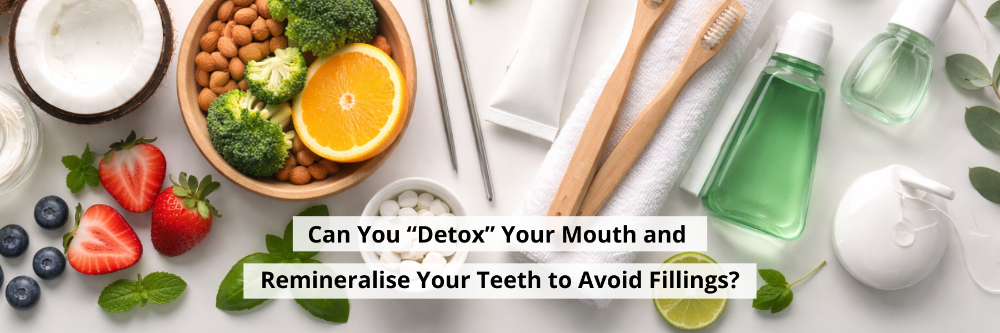
Can You “Detox” Your Mouth and Remineralise Your Teeth?
 
If you’ve ever wondered “How do I detox my mouth naturally?” or “Can early cavities heal without fillings?” you’re not alone. 
We believe that prevention is the best approach when it comes to caring for your teeth. The goal is simple: keep teeth strong, reduce the need for fillings, and avoid complex treatment wherever it’s clinically safe to do so.
 
This article explains what “mouth detox” actually means using research and evidence-based dentistry, how enamel remineralisation works, what fluoride and non-fluoride options can realistically do, and how the oral microbiome fits into the picture. 
 

What Does “Detoxing Your Mouth” Really Mean?


“Mouth detox” is a popular term online, but in clinical dentistry it doesn’t involve extreme cleanses or harsh rinses. A sensible, evidence-based approach focuses on:

  • Reducing repeated acid and sugar exposure

  • Disrupting plaque (biofilm) regularly and effectively

  • Supporting saliva, the body’s natural repair system

  • Choosing foods and products that nourish enamel, gums and beneficial bacteria

It’s less about removing “toxins” and more about creating an environment where tooth decay and gum disease are less likely to progress.


Prevention is the Best Approach

Tooth decay is a process, not an instant event. In the earliest stages, minerals begin to dissolve from enamel. This may appear as chalky white spots, or there may be no visible signs at all. At this point, the enamel surface remains intact. Once a cavity forms and the enamel surface collapses, the tooth cannot rebuild itself. At that stage, restorative treatment such as a filling or onlay is required. With the right conditions, minerals can be redeposited into enamel (AKA remineralisation) which may help prevent or delay the need for fillings. This process, known as remineralisation, is well documented in clinical and laboratory research.


How Enamel Remineralisation Works

The balance between demineralisation and remineralisation depends on several key factors. Oral bacteria metabolise sugars and refined carbohydrates, producing acids that draw minerals out of enamel. Between these acid attacks, saliva and remineralising agents can help replace lost calcium and phosphate.
 

Important influences include:

  • Saliva flow and quality, which buffers acids and delivers minerals

  • Frequency of sugar and acid exposure, where constant grazing prevents recovery

  • Remineralising agents, including fluoride and non-fluoride technologies

Fluoride remains the most extensively researched remineralising agent and is routinely used at our clinic. However, we also work respectfully with patients who prefer low-fluoride or fluoride-free strategies, clearly explaining benefits and limitations based on current evidence.


Remineralising Without Fluoride: What the Evidence Shows
 

For patients who prefer to minimise or avoid fluoride, there are alternatives with a growing evidence base.

CPP-ACP (GC Tooth Mousse)

CPP-ACP is a milk-derived complex that delivers calcium and phosphate to enamel in a bioavailable form.

Clinical trials and systematic reviews show that CPP-ACP can improve early enamel lesions and post-orthodontic white spot lesions when used consistently alongside good oral hygiene.

It is typically applied after brushing and left on the teeth to allow prolonged contact.

Important note: CPP-ACP is derived from milk protein and is not suitable for those with milk protein allergies or certain sensitivities.


Hydroxyapatite Toothpastes
Hydroxyapatite is the main mineral component of enamel. Toothpastes containing micro- or nano-hydroxyapatite aim to fill microscopic enamel defects and support remineralisation.

Systematic reviews and scoping studies show promising results for early enamel lesions, with some short- to medium-term studies reporting outcomes comparable to fluoride.

These products can form part of a fluoride-free approach when combined with excellent oral hygiene and dietary habits.


Nourishing Teeth, Gums and the Oral Microbiome

Your mouth is a living ecosystem. Every food choice feeds both you and your oral bacteria.

Patterns that tend to support oral health include: 

  • Whole, fibrous foods that stimulate saliva
  • Adequate protein and mineral intake

  • Limiting frequent sugary snacks and drinks

  • Being mindful of acidic beverages, even “healthy” ones


What About Milk and Lactose?

While milk contains lactose, it is considered the least cariogenic dietary sugar. Milk also provides calcium, phosphate and casein proteins that can reduce demineralisation. For most people, milk and cheese consumed with meals are considered tooth-friendly.
 

Probiotics, Prebiotics and the Oral Microbiome

The oral microbiome plays a role in tooth decay and gum disease risk.
 
Oral Probiotics
 
Certain oral probiotics are designed to colonise the mouth rather than the gut. Streptococcus salivarius M18 is one of the best studied.
Clinical trials show reductions in caries risk markers, plaque levels and gingival bleeding when used alongside standard oral hygiene.
These products are best viewed as supportive tools, not replacements for brushing, interdental cleaning or professional care.
 
Prebiotics and Postbiotics
 
Prebiotics include fibres and nutrients that feed beneficial bacteria, often obtained through a whole-food diet. Postbiotics are beneficial compounds produced by bacteria and remain an emerging area of research.

At Mentone Family Dentist, microbiome strategies are always combined with effective plaque removal and personalised risk assessment.
 

A Realistic “Detox and Nourish” Daily Routine

A consistent routine matters more than using many products.
 

Morning

  • Drink water

  • Brush with an agreed toothpaste

  • Clean the tongue gently


During the day

  • Keep sugary and acidic foods to set times

  • Rinse with water after meals or drinks

  • If you’re out and can’t brush, a simple water swish and swallow can help dilute acids until you can clean properly.


Evening

  • Brush thoroughly and clean between teeth

  • Apply remineralising products if recommended

  • Use oral probiotic lozenges last if advised


Vomiting, Reflux and Enamel Protection

Stomach acid significantly softens enamel. Brushing immediately after vomiting can worsen enamel loss.

Evidence-based advice includes:

  • Rinse with water or a mild bicarbonate solution

  • Wait at least 30 minutes before brushing

  • Use a soft toothbrush and gentle technique

  • Frequent reflux or vomiting should always be discussed with both your dentist and doctor.


When Fillings Are Still Necessary

Despite excellent habits, some teeth still require treatment. When this happens, our focus is on minimal intervention, biocompatible materials, and preserving future options. We clearly explain which areas can be monitored and remineralised, and which require active treatment, so decisions are shared and informed.
 

Our Perspective on Mouth Detox and Remineralisation

We don’t believe in extremes or quick fixes when it comes to oral health. The most effective care is usually the quiet, consistent kind - good daily habits, and early, regular checks before problems become complex.
 
We prioritise:
  • Prevention wherever safely possible
  • Remineralisation for early enamel changes
  • Honest discussions around fluoride and alternatives
  • Consideration of sleep, breathing, diet, medications and gut health
If you’re curious about prevention-focused or holistic dental care, or want clarity around what your teeth actually need right now, we are here to help. Schedule a complimentary consultation if you’re new to our clinic, or an appointment or exam to assess your oral health and whether remineralisation is a suitable option for your situation. 
 

Book Appointment Now


Clinical References 

1. Restrepo M, et al. Use of Casein Amorphous Calcium Phosphate (CPP-ACP) on white-spot lesions: randomised clinical trial. Oral Health Prev Dent. 2018;16:27–31. 
2. Zhang L, et al. Evaluation of the efficacy of casein phosphopeptide–amorphous calcium phosphate (CPP-ACP) on white spot lesions: systematic review and meta-analysis. BMC Oral Health. 2019;19:295. 
3. Anil S, et al. Nano-hydroxyapatite (nHAp) in the remineralization of early dental caries: a scoping review. Int J Environ Res Public Health. 2022;19(9):5629. 
4. Meyer F, et al. Hydroxyapatite as remineralization agent for children’s dental care. Front Dent Med. 2022;3:859560. 
5. Limeback H, et al. Efficacy of nano-hydroxyapatite on caries prevention – systematic review and meta-analysis. Clin Oral Investig. 2022;26(11):6511–6529. 
6. Di Pierro F, et al. Cariogram outcome after 90 days of oral treatment with Streptococcus salivarius M18 in children at high risk for dental caries: randomised, controlled study. Clin Cosmet Investig Dent. 2015;7:107–113. 
7. Babina K, et al. A three-month probiotic (Streptococcus salivarius M18) supplementation decreases gingival bleeding and plaque accumulation: randomised clinical trial. Dent J. 2024;12(7):222. 
8. Imparato JCP, et al. Cariogenic potential of human milk, bovine milk and infant formulas: a mini-review. Acad J Ped Neonatol. 2018. 
9. SA Dental. Dental erosion – how to prevent it. Government of South Australia, 2023. (Rinse with water after acid exposure, wait ≥30 minutes before brushing). 
10. Dentalini / Mental Health Eating Disorders Resource. Dental care in eating disorders. (Recommends water or bicarbonate rinse after vomiting, avoid brushing immediately). 
 
Non-Clinical / Manufacturer & Product References
1. GC Tooth Mousse™ – GC Australasia Dental – official product information for CPP-ACP crème (RECALDENT™). 
2. GC Tooth Mousse™ Official AU Consumer Site – general information and where to buy in Australia and NZ. 
3. APAGARD® / APAGARD Premio – Sangi Co., Ltd. – nano-hydroxyapatite toothpastes marketed as fluoride-free, enamel-supportive. 
4. Bioniq® Repair Toothpaste – Dr. Wolff / Bioniq Oral Care – BioHAP (hydroxyapatite) toothpaste with 20% hydroxyapatite, fluoride-free. 
5. BioMin® Toothpaste – BioMin Toothpaste Australia – bioactive glass technology for enamel repair and sensitivity relief. 
6. BLIS M18™ – BLIS Technologies & BLIS Probiotics – Streptococcus salivarius M18 oral probiotic for teeth and gum support. 
 
Important medical and legal note:
This blog is general information only. It does not consider your personal medical or dental history and is not a substitute for a full examination or individual advice. Always speak with your own dentist, doctor or healthcare professional before changing your oral health routine, especially if you are pregnant, have reflux, eating disorders, allergies, medical conditions or are taking regular medications.
Any surgical or invasive procedure carries risks. Before proceeding, you should seek a second opinion from an appropriately qualified health practitioner.
Privacy Policy